
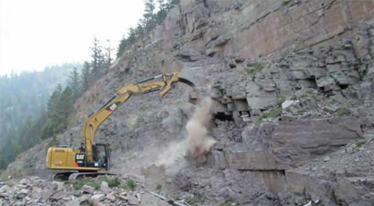
Rock cutting and chemical materials (blasting – fragmentation)
A jumbo excavator is used during the construction of the City Panhandle tunnel under Stockholm to drill holes for explosives. As the name suggests, the drill-and-blast process works as follows: a number of holes are drilled into the rock, which are then filled with explosives.
The detonation of the explosives causes the rock to collapse.
The debris is removed, and the surface of the new tunnel is reinforced.
These steps are repeated until the required drilling is complete.
The locations and depths of the holes (and the amount of explosives each hole receives) are determined by a carefully designed pattern, which, along with the precise timing of each detonation, ensures that the tunnel has a nearly circular cross-section.
During operation, blasting mats may be used to contain the blast, suppress dust and noise, prevent rockfall, and sometimes to guide the explosion.
القطع الصخرى بالمواد الكيميائية (تفجير-تفتيت)
حفارة جامبو أثناء بناء نفق سيتي بانان تحت ستوكهولم، تُستخدم
لحفر ثقوب للمتفجرات، وكما يوحي الاسم، تعمل عملية الحفر والتفجير
على النحو التالي: يتم حفر عدد من الثقوب في الصخر، ثم تُملأ
بالمتفجرات.
يؤدي تفجير المتفجرات إلى انهيار الصخر.
تُزال الأنقاض ويُعزز سطح النفق الجديد.
تُكرر هذه الخطوات حتى اكتمال الحفر المطلوب.
تُحدد مواقع وأعماق الثقوب (وكمية المتفجرات التي تستقبلها كل ثقب) بنمط مُصمم بعناية، والذي،
بالإضافة إلى التوقيت الصحيح لكل تفجير، يضمن
أن يكون للنفق مقطع عرضي دائري تقريبًا.
أثناء التشغيل، قد تُستخدم حصائر التفجير لاحتواء الانفجار، وكبح الغبار والضوضاء، ومنع تطاير الصخور، وأحيانًا لتوجيه الانفجار.